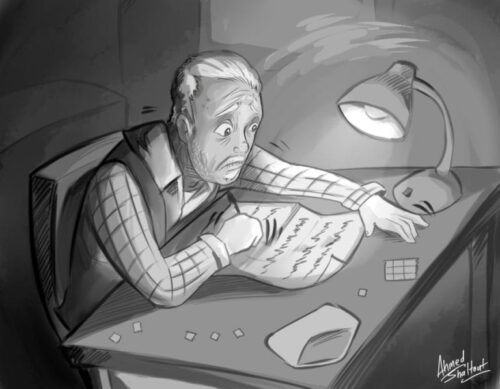
Artificial intelligence is changing everything—marketing, business, even fiction writing. AI tools can now draft stories, mimic author voices, and generate plot twists in seconds. But when it comes to the art of the novel, let’s be clear: AI can be a tool, even a muse, but it can’t replace the novelist. Not really.
Why? Because fiction doesn’t come from predictive text. Fiction comes from scars. And that’s where the line between AI and creative writing becomes clear.
1. Stories Begin in Pain
Every great story starts with disruption. A character is forced out of balance—by grief, love, betrayal, longing. That wound is the inciting incident, the reason a reader leans forward and cares.
Writers know this because we’ve lived it. Our scars whether emotional, psychological, physical or all three, are the well we draw from when we breathe life into our characters.
AI doesn’t have scars. It has data. And while data can imitate the shape of a story, it can’t give us the ache that makes a story feel alive.
This is why AI vs human creativity isn’t really a fair fight. Humans have wounds. We all learn to live with them. Machines don’t.
2. Mimic vs Meaning
AI can generate 50 possible plot twists or a dozen clever lines of dialogue. It can even mash together styles and voices into something that looks like art.
But fiction is not just words arranged in order. It’s meaning hidden inside the words. The trembling hand of a character who can’t say “I love you.” The quiet dread in the pause before a gunshot.
Those moments come from a human being reaching into their own life experience and saying: This is what it feels like.And that’s the line where AI and fiction writing diverge.
3. The Writer’s Job Shift
That doesn’t mean AI has no place in the writing process. For novelists, AI can be an incredibly useful assistant:
| Old Struggle | AI Handles | Writer’s Role |
| Endless research | Quick retrieval, summaries | Verify, contextualize, choose |
| Blank-page paralysis | Idea prompts, scenario drafts | Shape with voice, depth, emotion |
| Stiff dialogue | Generate variations | Edit for rhythm and authenticity |
| Worldbuilding overload | Suggest settings, lore, maps | Decide what actually serves the story |
In the context of AI and creative writing, these tools can help us move faster, explore more options, and break through creative ruts. But the novelist remains the final authority, the conscience, the soul.
4. Ethics and the Voice of Fiction
Here’s where it gets complicated. The line between inspiration and plagiarism gets blurry when a machine can mimic any voice. The temptation to let AI “co-write” entire chapters will be real.
But fiction readers have a finely tuned radar for what’s authentic. They don’t just want sentences that make sense. They want to feel the blood under the fingernails. The private shame, the reckless hope, the laughter that sounds a little too close to crying.
That doesn’t come from scraping the internet. That comes from you.
5. Scars Are the Novelist’s Advantage
The truth is, AI may be able to outpace us on productivity, but it can’t outpace us on truth.
Your scars—your heartbreaks, your regrets, the memories that still sting—are what give your characters depth. They’re also what make your stories irreplaceable.
AI can remix every novel ever written. But it can’t write the one that only you can tell.
This is the future of fiction writing with AI: machines provide speed and volume, but the novelist provides authenticity and humanity.
Final Word
Circuits can assemble stories. Only scars can make them matter.
AI will change how we draft, research, and edit. It will sit beside us at the desk like an over-eager intern, always ready with suggestions. But when it comes to the art of fiction, the novelist’s role hasn’t changed.
The machine may provide words.
The writer still provides the soul.