The other day, a young family member asked me a question:
“Why do we have to learn all this stuff when AI already has the answers?”
It could have sounded like a complaint rather than an honest question. After all, the “this stuff” referred to a couple of writing assignments from English class, each requiring long-form reading, some additional research, and a lot of critical thinking. Pretty much the opposite of what any red-blooded kid wants to do on a Saturday with good weather.
But this young family member has never been the whiny type, so I took the question at face value: thoughtful and honest. And to be fair, he was right about one thing: AI is very good at providing answers.
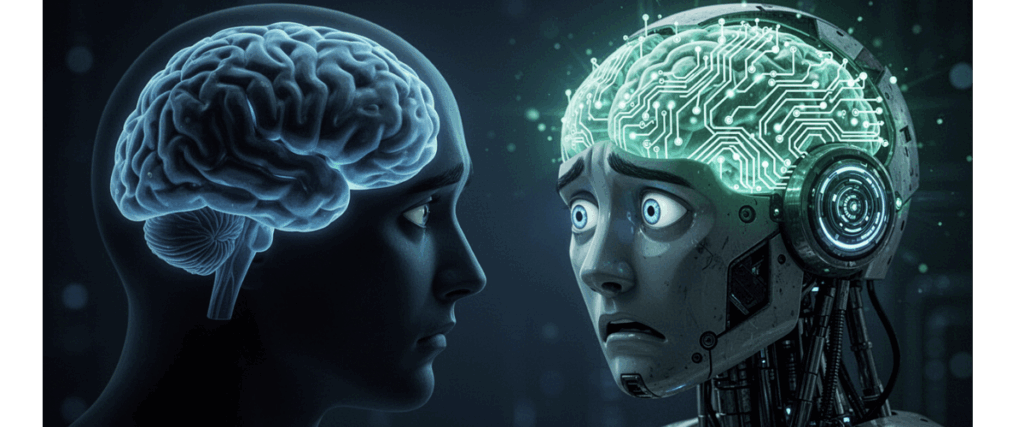
But school isn’t about memorizing and regurgitating answers. It’s about learning how to think and arrive at your own defensible conclusions. And herein lies the real danger of AI technology: outsourcing your thinking.
AI can produce any kind of information you need. Tell ChatGPT to summarize The Great Gatsby, and you’ll get something like this:
Jay Gatsby, a wealthy and mysterious man in 1920s New York, throws lavish parties in hopes of attracting Daisy Buchanan, the woman he once loved. The story is narrated by Nick Carraway, who observes Gatsby’s obsession with rekindling their past romance. Daisy is now married to Tom Buchanan, whose arrogance and infidelity complicate matters. Gatsby and Daisy begin an affair, but tensions escalate when Tom exposes Gatsby’s past. A tragic accident leads to Gatsby taking the blame for Daisy. In the end, Gatsby is murdered, and Nick reflects on the emptiness of wealth and the illusion of the American Dream.
The summary is accurate and perfectly fine. But is The Great Gatsby really about a rich man who throws parties to win back a girl?
Of course not.
It’s about the seduction and the corruption of the American Dream. It’s about longing for a past that can’t be reclaimed. It’s about illusion, class, identity, and the human tendency to chase green lights that keep moving farther away.
In fact, the green light at the end of Daisy’s dock may be the most famous symbol in American literature, and it’s not really about Daisy at all. It’s about hope, ambition, and the dangerous belief that the future will finally deliver what the past denied us.
AI can summarize the plot. But it can’t decide what the story means or why it means anything. That difference between information and interpretation is where humans still hold the advantage, and the advantage is enormous.
That advantage begins with the ability to think, a foundational skill that can develop into the kind of human superpowers that might just put AI out of a job.
If you want to make AI worry you might take its job someday, the path forward is surprisingly clear. You must develop the human abilities machines struggle to replicate.
Here are six human superpowers that will make AI nervous.
Human Superpower #1: AI Fluency
Critical thinkers know how to guide the tool—not just use it.
AI is an extraordinary assistant, but it still needs direction. The people who thrive in the coming years will be those who know how to prompt it thoughtfully, question its output, and refine its results. That requires judgment, curiosity, and skepticism, the core habits of critical thinking.
AI can generate answers. Critical thinkers know how to ask better questions.
Human Superpower #2: Data Interpretation
Data doesn’t speak for itself. Critical thinkers interpret it.
Modern professionals are surrounded by dashboards, reports, and performance metrics. AI can organize that information quickly but understanding what it actually means requires analysis and judgment.
Critical thinkers look beyond the numbers. They ask what the data suggests, what might be missing or misleading, and what actions should follow. They must because data doesn’t drive decisions. Smart people do.
Human Superpower #3: Strategy & Execution
Critical thinkers decide what matters most and how to act on it.
AI can help generate ideas and possibilities. But strategy requires prioritization, tradeoffs, interoffice negotiation, and market timing. Execution requires discipline, coordination, and persistence. Those decisions come from human judgment.
Critical thinkers evaluate options, identify the path forward, and guide the work until the result is real.
Human Superpower #4: Problem Solving
Critical thinkers navigate complexity and ambiguity.
Many of the challenges professionals face today aren’t simple or obvious. They involve competing priorities, incomplete information, and unpredictable consequences.
AI can suggest possibilities. But deciding which solution actually works requires human reasoning.
Critical thinkers examine assumptions, weigh evidence, and form conclusions when the path forward isn’t obvious.
That ability to think through complexity is one of the most valuable skills a person can develop.
Human Superpower #5: Risk Management
Critical thinkers spot problems before they become disasters.
Many costly failures don’t happen because something broke. They happen because no one questioned the existing process.
Critical thinkers notice weak assumptions, flawed systems, and hidden bottlenecks. They ask the uncomfortable questions that reveal risks before they become expensive mistakes.
In a world moving faster than ever, that kind of thinking can save organizations enormous time, money, and reputation.
Human Superpower #6: Leadership
Critical thinkers understand people, not just information.
The ultimate human advantage isn’t intelligence alone. It’s the ability to lead other humans.
Leadership requires empathy, emotional intelligence, and the ability to communicate clearly. It requires understanding motivations, resolving conflicts, and guiding people toward a shared goal.
AI can process information. But people follow people. And in every organization, the real work is done by people and always will be.
The best leaders are those who listen carefully, think critically, and communicate with clarity and purpose.
Your Superpowers
All of these human superpowers start in the same place: a mind that hasn’t outsourced its thinking. And that brings me back to the question my young relative asked.
“Why do we have to learn all this stuff when AI has the answers?”
The answer is simple.
AI can generate answers. But the people who shape the future won’t be the ones who collect answers, they’ll be the ones who never relinquish the most valuable skill a human possesses: the ability to think.

You might also like:
SEO in the Age of AI: Why Understanding Searcher Pain Still Wins
How AI Is Rewriting SEO (And How to Adapt Your Content Strategy)
The Strategic Marketer Returns: How AI Rewrites Our Job Description
